
A/C Recharge and Refrigerant Leak Repair
Your air conditioning is a sealed loop. The refrigerant inside it does not get used up the way gas does, so if the system is low, it is leaking. Finding that leak is the actual job. The recharge is the last five minutes of it.
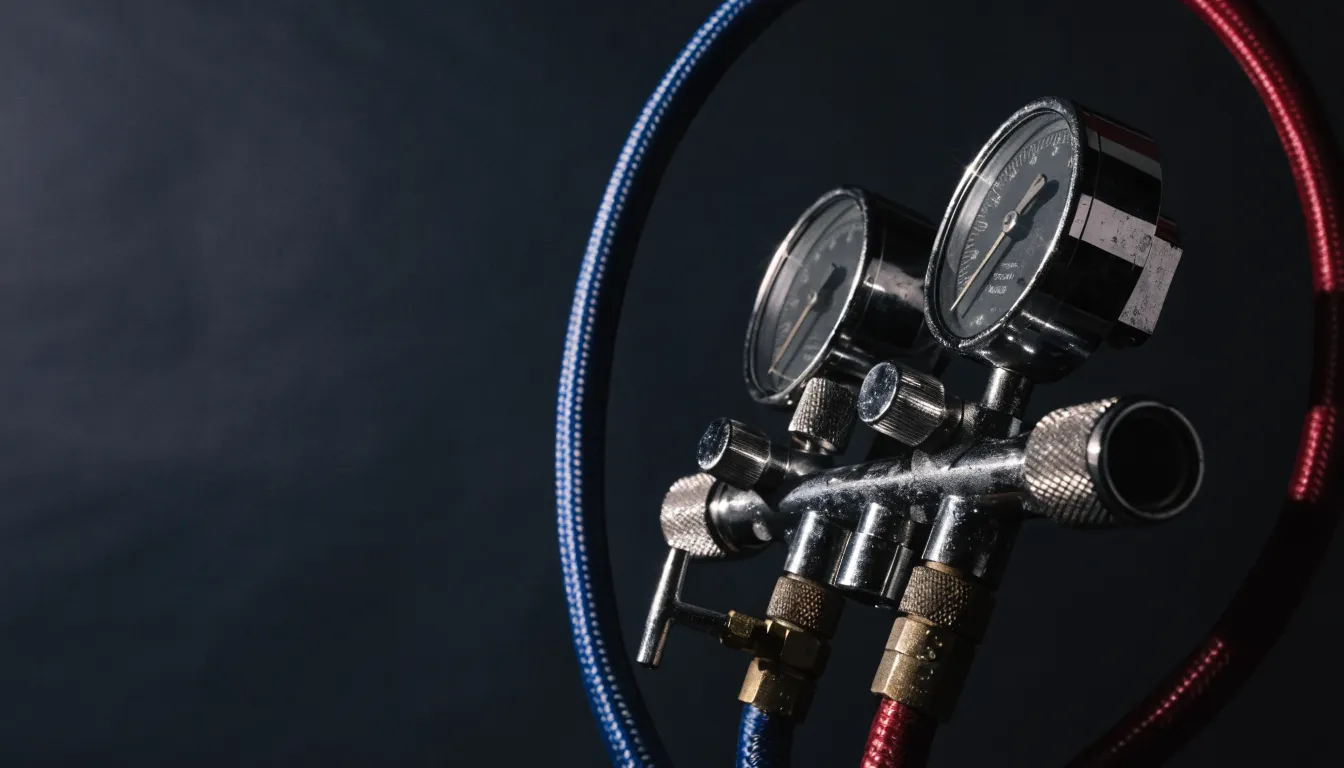
How we find the leak
Big leaks show themselves: an oily stain at a fitting, a stone hole in the radiator-looking part up front, a hose weeping where it is crimped. Small ones take work. We use an electronic sniffer around the fittings, a dye that glows under a UV light when the leak is slow enough to need a second visit, and on an empty system we fill it with harmless nitrogen gas and listen for where it goes. The usual leak spots are the condenser behind the grille, the seal on the pump, rubber O-rings that have gone hard in the heat, the cooling coil inside your dash, and the service ports themselves.
Vacuum first, then a weighed refill
After the repair we pull the system into a deep vacuum, and that is not a formality. Vacuum boils out any moisture, and moisture mixes with refrigerant and oil to form acid that eats the A/C pump from the inside. Then we put in a weighed amount of refrigerant, exactly what the sticker under your hood calls for. Filling by gauge feel alone overshoots as often as it undershoots, and an overfilled system actually blows warmer than a correct one.
Why we will not just top it off
Federal law says a shop cannot knowingly let refrigerant escape into the air, and topping off a leaking system is exactly that on a delay. It also costs you twice, once now and again when the air goes warm. If you still want the cheap version on an older car, we will do it and tell you honestly how long it is likely to last first.
What's included
- Leak found with electronic sniffer, UV dye, or nitrogen pressure test
- O-rings, hoses, condenser, and service ports repaired
- Drier replaced any time the system is opened up
- Deep vacuum, then a weighed refill to factory spec
- Vent temperature checked before you leave
A/C Leak Repair & Recharge: questions we get asked
Family-owned since 1981
AAA Approved Auto Repair
12-month / 12,000-mile warranty on qualifying work
32125 Arbol Real, Thousand Palms, CA 92276
Monday – Friday: 8:00 AM – 5:00 PM
Saturday: Closed
Sunday: Closed
More on auto a/c repair
Related repairs
Other services at the shop
Where we serve
We serve drivers across the Coachella Valley: