Starter Diagnosis and Replacement
A car that will not crank is one of the easiest problems to misdiagnose, because a weak battery, a corroded cable, a bad ground, and a dying starter all sound the same from the driver seat. So we test the whole starting circuit before anything comes off the car.
What the sound tells us
One loud click with the lights staying bright means the starter got its signal but the motor did not turn, or it is trying to pull more power than the cables can deliver. Rapid clicking usually means the voltage is collapsing, which points at the battery or its connections. A grinding noise points at the starter gear or the teeth it meshes with. Silence with a good battery moves the search to the ignition switch, the safety switch that stops the car cranking in gear, a relay, or the wire that carries the start signal.
Two measurements settle it
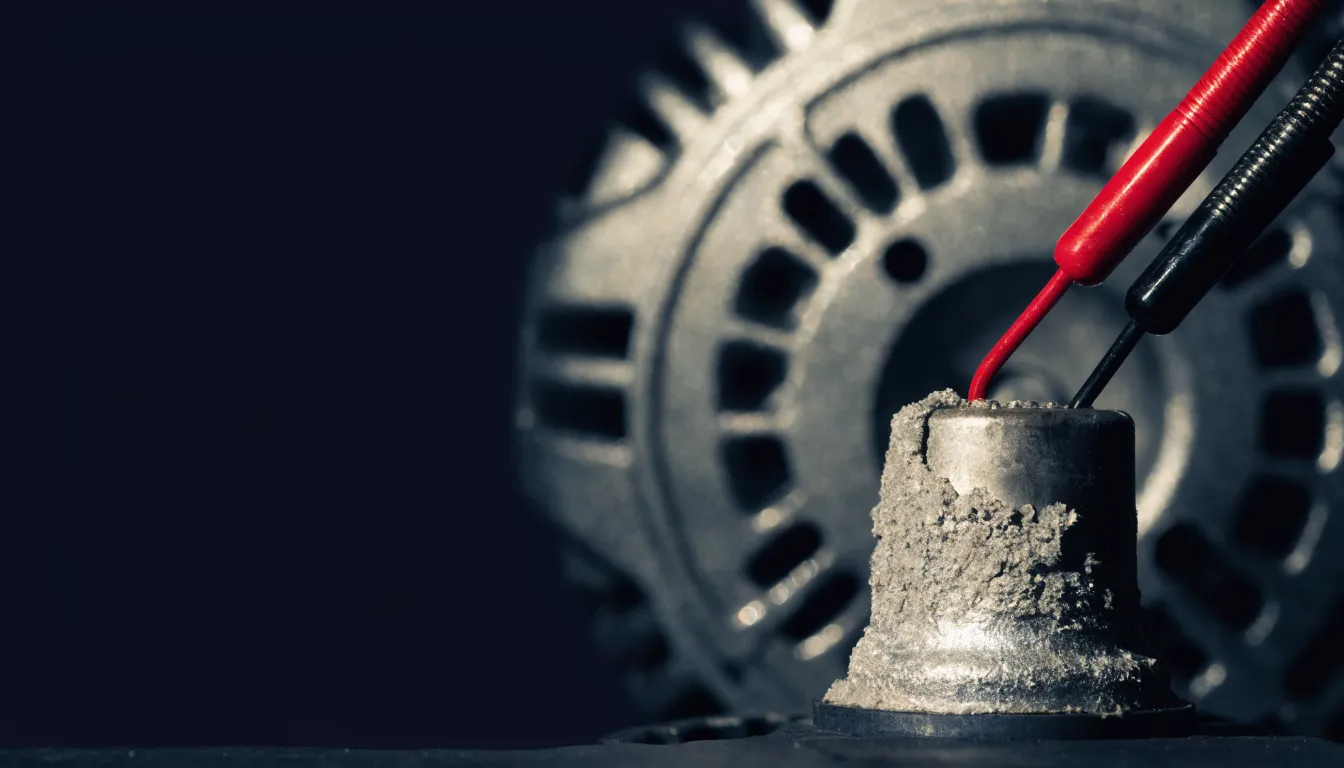
First, how much current the starter pulls while cranking. Second, how much power is actually arriving at it, versus getting lost in the cables and grounds along the way. A starter pulling too much current is worn out inside. Normal current with low power arriving means the problem is in the wiring ahead of it. That difference is the difference between replacing a starter and cleaning a cable end, and it takes minutes to find out.
The ones that only fail when hot
A car that starts fine in the morning and refuses after twenty minutes parked in the sun is a classic. Heat raises resistance in worn starter parts and marginal connections, so the starter that turns a cold engine cannot turn a hot one. These are the failures that get sent home with "everything checked out fine," because the car got tested cold. We test it in the condition where it actually fails.
What's included
- Battery and cables tested before the starter is blamed
- Cranking current and power loss measured
- Ignition, relay, and safety switch circuits tested
- Starter replacement and gear teeth inspection
- Ground straps and cable ends repaired
Starter Diagnosis & Replacement: questions we get asked
Family-owned since 1981
AAA Approved Auto Repair
12-month / 12,000-mile warranty on qualifying work
32125 Arbol Real, Thousand Palms, CA 92276
Monday – Friday: 8:00 AM – 5:00 PM
Saturday: Closed
Sunday: Closed
More on electrical & charging
Other services at the shop
Where we serve
We serve drivers across the Coachella Valley: